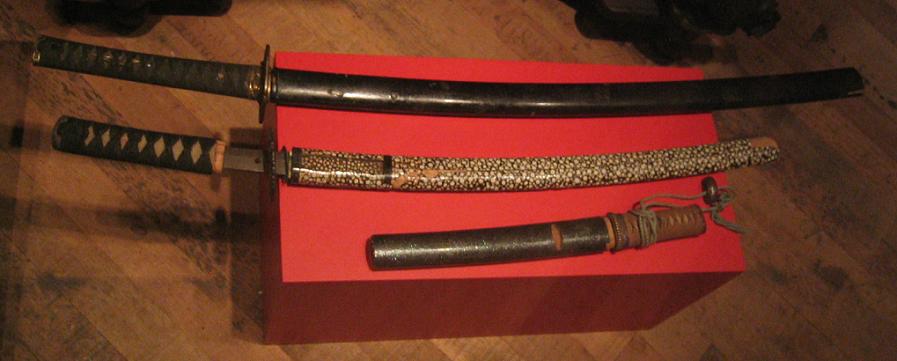
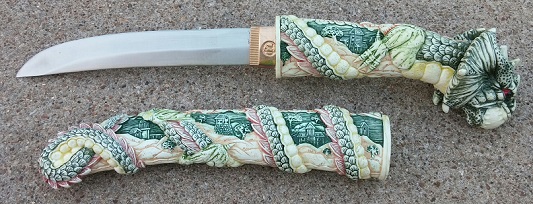
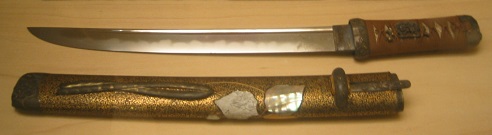
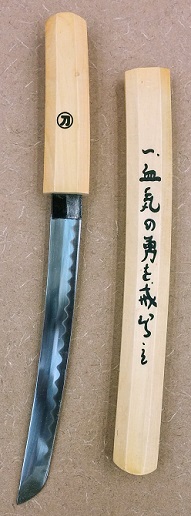
Subject: 侍 samurai warrior
Culture: Japanese
Setting: Tokugawa shogunate, Japan 17th-mid 19thc
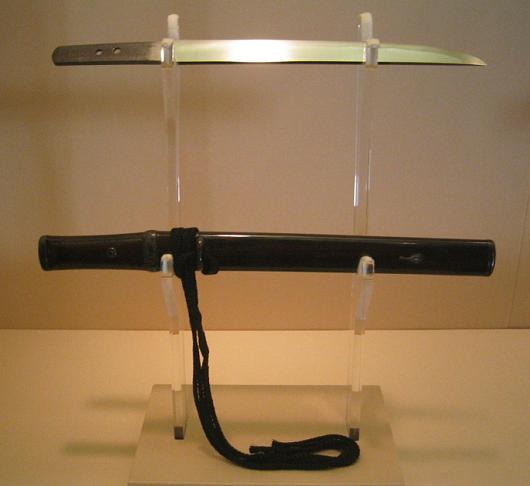
Object: 短刀 tantō dagger
National Museum of Ireland -- Decorative Arts & History > What's in Store? *
* Metropolitan Museum of Art > Stone Gallery of Arms and Armor [bottom]
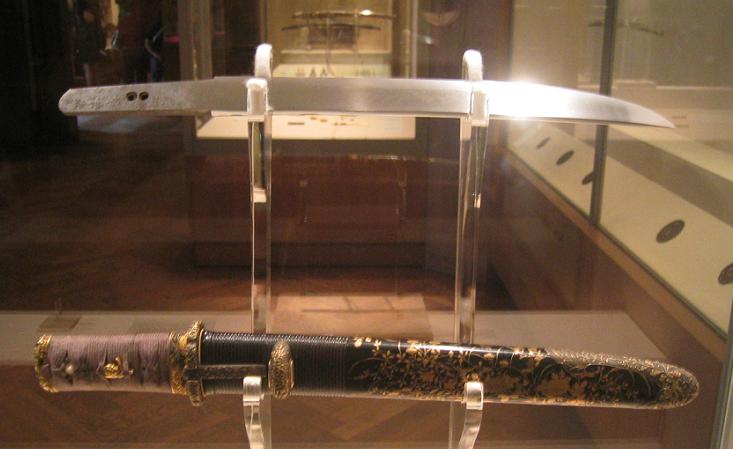
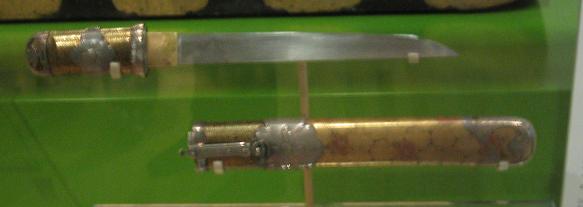
"Mounting for a Tantō
Silver, lacquered wood, silk
Fittings inscribed by Hasaharu
Edo period, 19th century"
* National Museum of Ireland -- Decorative Arts & History > What's in Store?
* Metropolitan Museum of Art > Stone Gallery of Arms and Armor
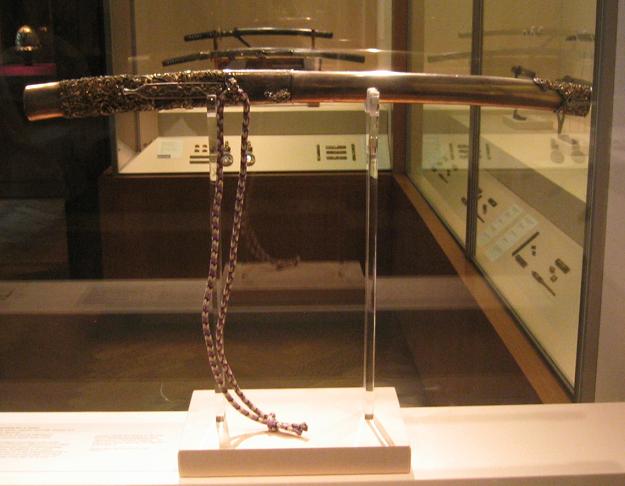
"Mounting for a Tantō Gold, silver, copper, and silk; design of a peony blossom Inscribed by Katsura Mitsuharu
Taisho period, dated June 1922
This set of dagger mountings is one of the masterpieces of Katsura Kitsuharu (1871-1962), the last traditionallly trained sword mountings maker in Japan. In addition to its superb workmanship, the set is also important because it was commissioned as an exact copy of a set of dagger mountings of the late 12th to early 13th century, which was owned by the Aso Shrine (Kumamoto prefecture) and registered as a National Treasure. The original has been missing since the end of World War II."
* Metropolitan Museum of Art > Stone Gallery of Arms and Armor
*
* Royal Ontario Museum > Takamado Gallery of Japan
* Royal Ontario Museum > Takamado Gallery of Japan
* Royal Ontario Museum > Takamado Gallery of Japan
* Royal Ontario Museum > Takamado Gallery of Japan
*
* Metropolitan Museum of Art > Stone Gallery of Arms and Armor
* Tropenmuseum > Nederlands-Indië
* American Museum of Natural History > Stout Hall of Asian Peoples
Shuang Long *
* Crow Collection of Asian Art
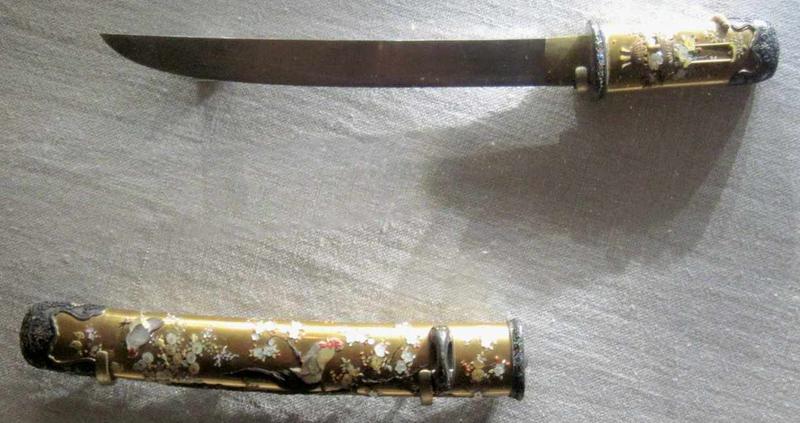
"Sword mount for a short blade (tanto-koshirae) Japan, Meiji period, late 19th century
Lacquer, iron, steel, mother-of-pearl, coral, malachite, hardstone, enamel, and gilding" ...
* Crow Collection of Asian Art
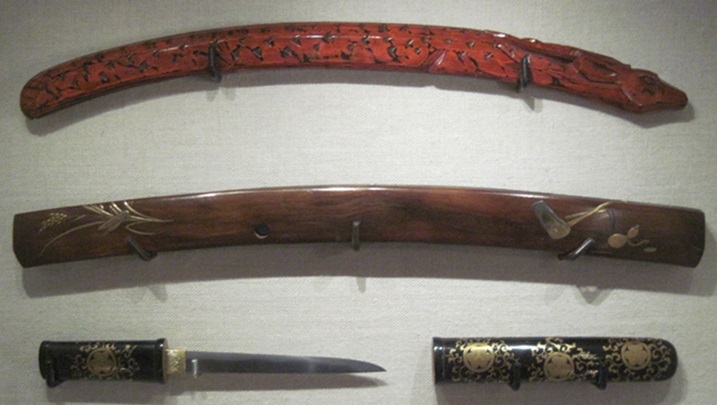
"Morikawa Toen Japan, 1820-1894 Bokuto ('doctor's sword') in the form of a deer Black and vermillion lacquer on wood, Negoro style"
"Bokuto ('doctor's sword') with summer grasses and insects Japan, 19th century
Lacquer with gold on black persimmon wood and unidentified hardwood"
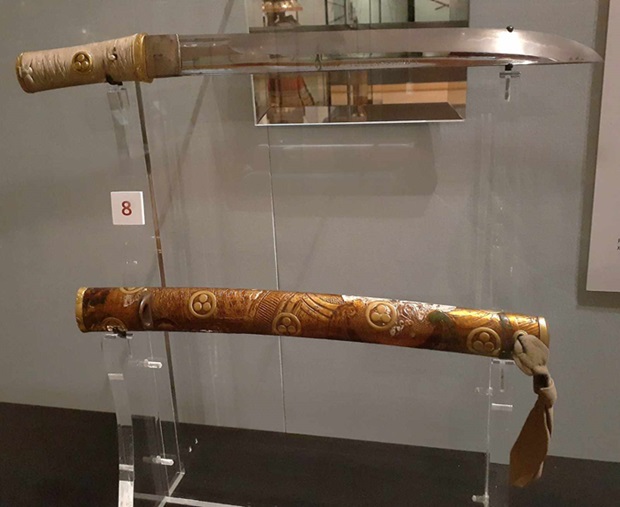
"Tantō (short sword for a samurai wife) with sheath having Sakai family crest Japan, 19th century Lacquer and gold on wood; steel"
*
Royal Armouries Museum > Oriental Gallery *
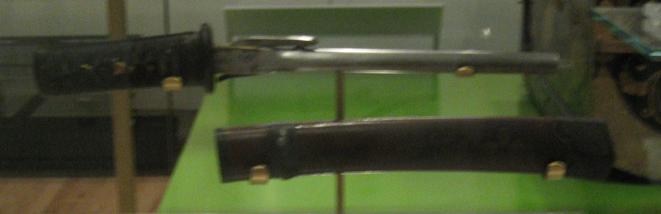
"Dagger without hand guard (aikuchi)
Although the Japanese occasionally incorporated European elements into their armours for novelty value, European swords were regarded as being rather primitive. This dirk, which incorporates a European blade reshaped and hardened in the Japanese style, appears to be the only Japanese sword in the world fitted with such a blade. German blade, dated 1625; Japanese mounts, Edo period (1603-1867)" ...
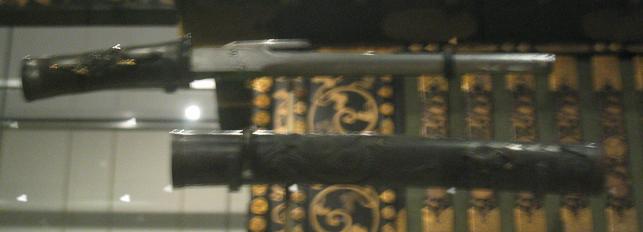
"Dagger (aikuchi) German blade, early 17th century; Japanese mounts, Edo period (1603-1867)
The first arrival of Europeans in Japan in 1543 resulted in pieces of Japanese arms and armour which combined different influences.
"The Japanese thought that European swords were rather primitive. Yet this dagger incorporates a blade manufactured in Solingen in Germany, reshaped and hardened in the Japanese style. It seems to be the only known Japanese sword in the world fitted with such a blade.
"The scabbard is covered with painted, textured Dutch leather, used in Europe for covering walls and furniture.
The mounts display a kamon (heraldic device associated with the Matsura family who governed the island of Hirado.
"The original trading station of the Dutch East India Company (Verenigde Oost-Indische Compagnie or VOC) was based on Hirado.
It is likely this dagger was made as a novelty weapon designed to appeal to the Matsura." ...
Dallas Museum of Art > Samurai to the Imperial Court: Japanese Metalwork *
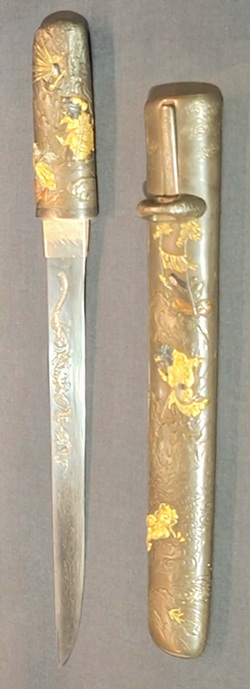
"Dagger (Tantō) About 1850, Late Edo period Takamoto Hidemune (1819-1887)
Steel, gold, shakudō, silver, shibuichi, and copper Signed Takamoto Hidemune
A tantō, or dagger, was typically used for close combat or self-defense. The mounting (sheath) for this dagger depicts the Shinto god of sea and storms, Susano-o no Mikoto, slaying a dragon. The hilt (handle) shows his sister Amaterasu, goddess of the sun, in a cave.
The maker, Takamoto Hidemune, trained with one of the last great sword-fittings masters of the Edo period, Tanaka Kiyotoshi (1804-1876)."
"Daga (Tantō) hacia 1850, finales del período Edo Takamoto Hidemune (1819-1887)
Acero, oro, shakudō, plata, shibuichi y cobre Firmado Takmoto Hidemune
Un tantō o daga se utilizaba normalmente en el combate cuerpo a cuerpo o en la autodefensa. La vaina (funda) de esta daga representa al dios sintoísta del mar y las tormentas, Susano-o no Mikoto, matando a un dragón. La empuñadura (mango) representa a su hermana, Amaterasu, diosa del sol, en una cueva. El fabricante, Takamoto Hidemune, se formó con uno de los últimos grandes maestros de accesorios para espadas del período Edo, Tanaka Kiyotoshi (1804-1876)."
*
Royal Armouries Museum > Oriental Gallery *
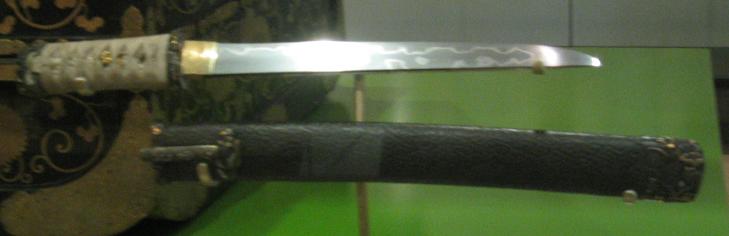
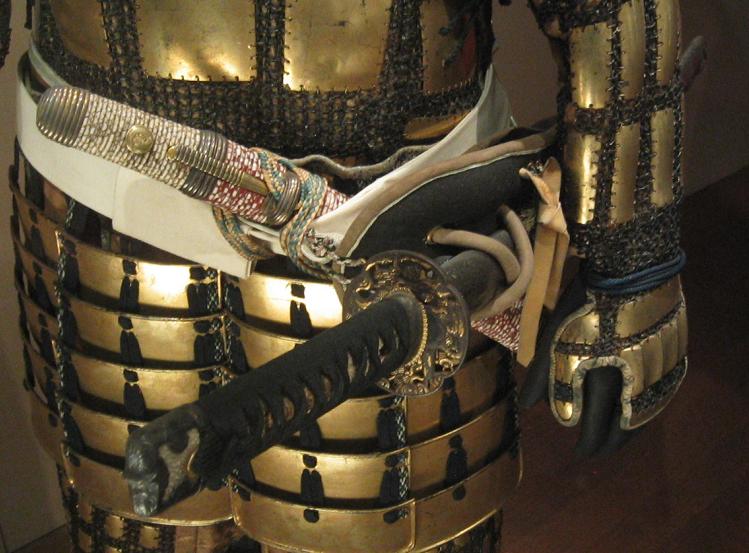
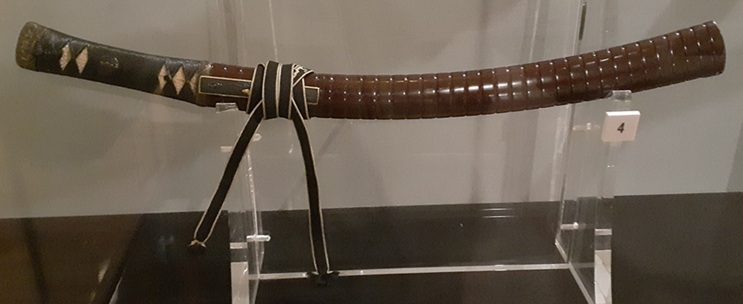
"Dagger without hand guard (aikuchi) It was normal for samurai to wear a dagger or tanto in addition to their tachi in battle. Those without
a guard or tsuba were called aikuchi or 'meeting of mouths' since the mouth of the scabbard and hilt interlock. Japanese, late Edo period" ...