Subject: gangsta
Culture: urban southern Black American
Setting: Dirty South hip-hop, southern United States 2000s
Context (Event Photos, Primary Sources, Secondary Sources, Field Notes)
* Richardson 2007 p221
"Gangsta rap was regarded by some critics as a rap fad that would soon pass -- in much the same way that rap itself was heralded as an art form that would eventually lose its popular appeal. The form maintained its viability in the wake of the tragic deaths of its key practitioners such as Tupac Shakur and Biggie Smalls in part through the development of the genre in the South. Though the popularity of the genre has waned in recent years, its regional shift from the West to the South in the late 1990s helps explain why the current movement in southern rap was initially replete with references to 'gangstas' and 'playas.'
"It is important to recognize the references to 'gangstas' and 'playas' that were prevalent within the early hardcore, gangsta style of southern rap as a response among some artists to longstanding perceptions in broader rap discourse of such terms as being incompatible with black southern male identity. Blakk's efforts to cast the gangsta as southern, which mirror larger trends in the southern rap genre, are successful, it would seem, in helping to inscribe this type within a more diverse geography in the national context and to dislodge its significations that have been primarily associated with urban contexts. We can recognize the 'gangsta' concept as a culturally indigenous example of black masculine fashioning. At a linguistic level, it appropriates and revises 'gangster,' of course, a word primarily attached to white masculine organized crime and racketeering circuits in the nation's urban areas in the early decades of the twentieth century, which consolidated during Prohibition. In general, rap discourse's resignification of the 'gangsta' recalls the related term 'nigga,' which attempts to revise and unsettle the historical racist epithet 'nigger' while affirming friendship and community among black men. Furthermore, the gangsta recuperates the outlaw sensibility associated with the 'bad Negro' in African American cultural history. Southernized, the 'gangsta' helps reverse this type's characteristic urbanization that was typical in the twentieth century and revives its southern folk dimensions."
* Presdee 2000 p130-131
"In hip-hop and rap these is no need for special legislation to control and criminalise both music and culture, since the way of life that is 'talked of', that makes up the story of the lives of the performers in a musical and rhythmic form, is already criminalised. Indeed what better way of saying the unsayable, of stating the illegal in a legal form, than bringing the reactions of those in poverty and those from minority groups forward through the carnivalesque qualities of hip-hop and rap. [...]
"It is the political and economic realities of life outside of 'polite' society that are reflected in rap as it analyses and celebrates the 'otherness' of poverty and struggle. It celebrates the cultural 'answer' to ascribed social position and economic survival, which includes the legal and illegal acquisition of wealth, the struggle not just for work but the struggle at work. It reflects oppression both through education and through policing and the struggle for 'respect' in life. It not only emphasises suffering but is also a celebration of leisure time as the time free from the industrial processes of production. And it is in the 'street' where others daren't go that hip-hop and rap culture is lived and comes to life. The aim is to be 'street-wise', to survive with 'dignity' and 'respect' amongst your own, without 'selling out'."
* Krishnamurthy 2023 p188
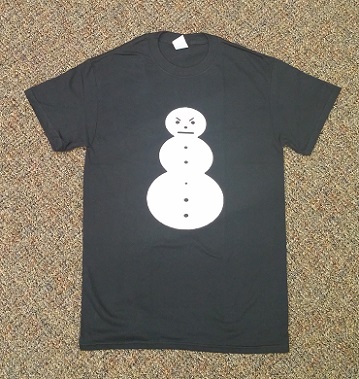
"In the South, the drug dealer was the 'd-boy' (a slang for dope boy) and the place he was slinging from was the 'trap.' Trap music as a sub-genre originated in Atlanta during the 1990s and helped propel the region from under the shadow of either coasts, as André 3000 of OutKast predicted at the 1995 Source Awards: 'The South got something to say!' His prescience was manifested in the aughts. Trap music's distinct sound of synth beats with pounding percussion and complex hi-hats (influenced by the Roland TR-808 drum machine) was infectious. Trap artists fed the streets by incessantly releasing music in the form of mixtapes. The biggest artists leaned into their d-boy background: T.I. crowned himself the 'Kang of the South,' Young Jeezy made promo T-shirts emblazoned with a Snowman representing his cocaine ties, and Gucci Mane's 2012 mixtape Trap Back featured incarcerated Black Mafia Family (BMF) kingpin Demetrius 'Big Meech' Flenory."
* Richardson 2007 p222
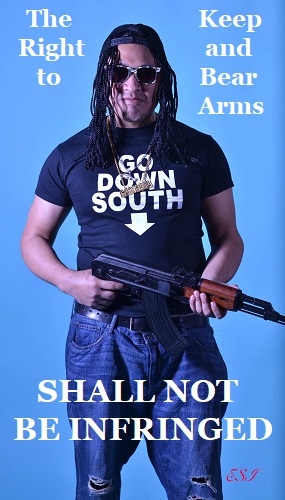
"Perhaps more than anything, the violence and looting in the city of New Orleans that emerged after Hurricane Katrina points to the real-life consequences of gangsta posturing among some young black men, as do the high murder rates in the city, and reveal the harm they can do. It was, in fact, unconscionable and unthinkable that, in some cases, armed youth in the city were the ones who hampered desperate rescue efforts and attempts to save lives after the hurricane. In the aftermath, some critics' responses addressed the media's emphasis on the violence in the city and pointed out how these representations reinforced racial stereotypes in some instances, particularly of young black men. But they typically failed to acknowledge the serious threats that such bands of youth posed to human safety and to acknowledge the dire moral crisis that such behavior demonstrated."
Grill
* Ossé/Tolliver 2006 p86
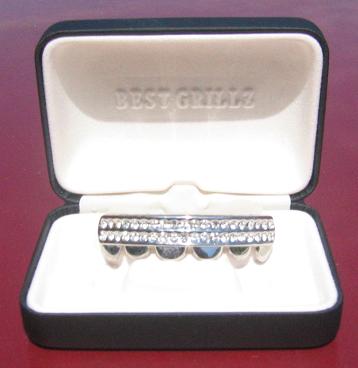
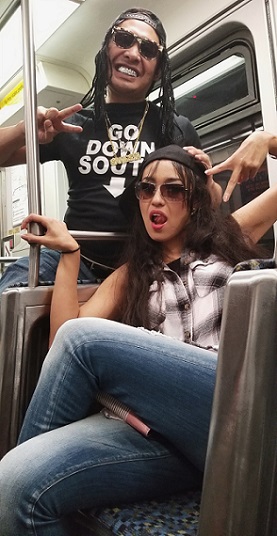
"Gold teeth have always been a status symbol. It was Arculanus (Giovanni d'Arcoli) who, in 1848, first had the idea of using gold for dental fillings. Having gold fillings was a sign of wealth; travelers in a tight spot could even use them as a form of currency. God forbid you were buried with your gold teeth: more than likely a grave digger would relieve you of your fronts, if your undertaker hadn't done so already. Nowadays in hip-hop parlance, 'the grill' is slang for a person's mouth or face; the term has been attributed to the elaborate, ornate grills of luxury automobiles. A 'grill' involves the bonding of teeth; the first was sighted on the streets of downtown Brooklyn during the toddler years of hip-hop. Just Ice, Kool G Rap, and Flavor Flav were some of hip-hop's first wearers of the gold fronts. The Dirty South carries on the rich tradition of the grill as seen on Big Gip of Goodie Mob -- the first to rock the platinum grills, followed by Baby of the Cash Money Millionaires."
* Calasibetta/Tortora 2003 p267
"Around 2001, fans of rap music began to wear clip-on covers for their teeth, called fronts, made of gold and set with diamonds or other gems. When a person wearing these devices smiled, it was said that his or her smile had bling."
* Sims 2006 July 17 online
"Grillz (also known as fronts) slide over existing teeth and consist of metals and/or precious stones such as platinum and diamonds. Depending on the stone, metal and number of teeth to be fronted, prices can range anywhere from $50 to several thousand. Predecessors to grillz weren't easily removable and involved reshaping the tooth to accommodate a new crown, often in gold, silver or platinum. Now, custom grillz require a dental mold upon which the metal and stones are mounted."
* Jones 2006 January 31 online
"Fronts have been a staple in the hip-hop world since Slick Rick and Flava Flav wore them back in the 1980s. By the 1990s, members of the Staten Island hip-hop collective the Wu-Tang Clan would sport them, but the look really took off with the help of the Southern hip-hop craze. Master P., Baby, Ludacris, and Lil Jon all often flash sparkling smiles."
Shirt
* Krishnamurthy 2023 p188-189
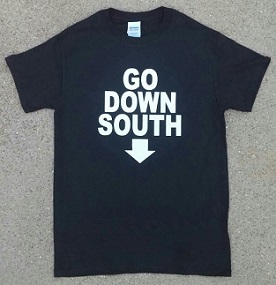
"Southern rap usually referred to artists from Atlanta, but the region was broader and included Houston, New Orleans, Miami, Memphis, and parts of the Midwest. Initially, the South's fashion was as respected as the music. Rappers dressed like ordinary people, especially when viewed through the critical lens of New York City. Everybody more or less had the same uniform: a white T-shirt that was several sizes too big and baggy jeans accessorized with a chain and grillz. Dem Franchize Boyz made a tribute to this look with 'White Tee' in 2004. Even the successful Cash Money Millionaires, which included rappers Lil Wayne, Birdman, and Juvenile, wore this in their breakout music video for 'Back That Azz Up' in 1999. Sports jerseys were also popular and impactful in tapping into regional tribalism. St. Louis native Nelly introduced himself to the world in 'Country Grammar (Hot Shit)' in a Cardinals jersey and Air Force 1s in 2000. Southern rappers also loved to be shirtless, which made sense due to the heat, compared to their colleagues above the Mason-Dixon Line. The Southern look was democratic -- anybody could throw on a white Hanes T-shirt."
* Sanneh 2005 online
"If you're looking for the year's best and most memorable hip-hop T-shirt, then look no further than the angry snowman. Actually, he has so few facial features that it's hard to be sure exactly what his mood is. The two eyebrows point down in the middle, V-like; that's the international cartoon symbol for malevolence. But the mouth is a straight line: evidence of the snowman's sangfroid. (Comes with the territory, perhaps.) He's got no arms -- not even twigs -- or legs, just a couple of overlapping circles for a body. (Depending on which T-shirt design you've got, your snowman may be equipped with a nontraditional accessory: a bandanna headband.)
"The snowman is the logo of Young Jeezy, the Atlanta rapper who has established himself as hip-hop's brightest new star. His excellent major-label debut, "Let's Get It: Thug Motivation 101" (Island Def Jam), was released at the end of July, and it is one of the year's biggest musical success stories. The album debuted at No. 2 on the Billboard chart and has yet to drop out of the Top 20, with a hit single that just reached the Top 10; it has already been certified platinum, for shipping more than a million copies to stores. And, in perhaps the most impressive proof of Jeezy's success, his angry snowman has become one of the year's most heavily bootlegged T-shirt designs.
"The snowman's success is proof that Jeezy has a knack for self-promotion, but it's also an example of the way rappers use coded language to juggle multiple constituencies. A casual observer might see the snowman as just one more improbable hip-hop fashion trend. (Half a decade ago, hip-hop fans bedecked themselves in oversize shirts and sweaters emblazoned with characters from Looney Tunes or "Peanuts.") Some listeners might be willing to accept Jeezy's deadpan explanation that he calls himself the snowman because of all his ice, or diamonds.
"But most of his fans have heard Jeezy offer a different explanation for his deceptively cute alter ego. In one of his first hits, he rapped, "Get it? Jeezy the Snowman/I'm iced out, plus I got that snow, man." Jeezy's rhymes are full of cocaine-dealer boasts, and on his CD itself, the snowman rests suggestively atop a pile of something white and powdery. If the gnomic power of the snowman itself isn't enough, some T-shirts come with a quotation that drives the point home: on the back, they say, "I got that snow man!"
"In August, Philadelphia Weekly reported that one manufacturer announced it was halting distribution of the shirts; apparently the owner had only recently cracked the code. But it hardly mattered: like the old unlicensed T-shirts that portrayed Bart Simpson as black, snowman T-shirts have become an underground hit. On street corners, at flea markets, even in record shops, you can buy snowman shirts in just about any color you want, in sizes ranging from too big (for the gentlemen) to too small (for the ladies), with or without the explanatory text."
Jewelry
* Ossé/Tolliver 2006 p6-7
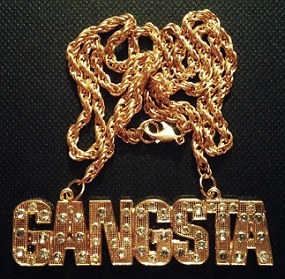
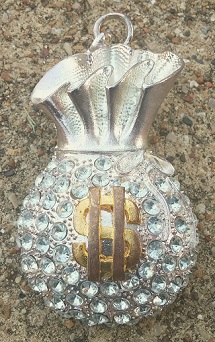
"With the proliferation and consistent success of hip-hop culture as an ever-growing way of life among people around the globe, we have observed, in the form of bling, the current permutation of man's love affair with all things shiny. From the corners of Nostrand Avenue and St. John's Place in Brooklyn to the fashion runways of Paris, it is all but impossible not to notice hip-hop's influence on the way we rock jewelry. The influences shaping today's form of bling can be attributed to the edgy-slick marriage of two factors: (1) the birth and rise of hip-hop in American culture and (2) the values pumped constantly into the psyche of a young hip-hop nation during the era of Reaganomics. From the late 1970s to the mid-1980s, Hollywood provided a quick fix for a generation left disappointed by the broken promises of the civil rights era. We were fed a high-calorie diet of materialism in movies like Scarface (the blueprint for gangster rap), and in TV shows like Dallas (who can forget O.G. J. R. Ewing?), Dynasty (kindergarten for the likes of Lil' Kim, Trina, and Foxy Brown), Miami Vice with its smooth criminals and fly-ass cops; and finally, the sperm that birthed current lifestyle shows like /MTV Cribs -- Lifestyles of the Rich and Famous.
"The lesson that the hip-hop generation took from that period was that in order to be accepted in this society, one had to be successful. Not successful as defined by shows like [The] /Jeffersons and [The] Brady Bunch, but mega-paid. Big, large and in charge! Back then, hip-hop was a fad (as we were constantly being told by our parents, older cousins, uncles, and anyone else in our community who doubted the hype). As this 'fad' evolved and became a major cultural movement, the hop-hop generation began to dictate lifestyles that perfectly mirrored what was fed to it during its formative years by mainstream society. Bling has since become synonymous not just with jewelry (it was included in the 2000 Oxford English Dictionary) but with hip-hop culture in general since the mid-1990s."
Pants
* Demby 2014 online
"For sagging's many detractors, kids wearing their pants below the waist — or below the butt cheeks, in the case of the look's most fervent adherents — has doubled as a reliable shorthand for a constellation of social ills ostensibly befalling or propagated by young black men. A dangerous lack of self-respect. An embrace of gang and prison culture. Another harbinger of cultural decline. Those are all things that people say about hip-hop, which helped popularize the sagging aesthetic. And if those are the presumed stakes, it's hardly any wonder why opposition to sagging sometimes has the feel of a full-on moral panic.
"Such is the apoplexy around the styles that many of the most vocal proponents of sagging bans are people who might otherwise be wary of putting young black men into unnecessary contact with the criminal justice system. When Jefferson Parish, La., banned sagging last year, the move got a big cosign from the head of the nearby chapter of the NAACP. 'There is nothing positive about people wearing saggy pants,' he told a local TV station. (The national NAACP, it should be noted, has fought back against bans like these.) And a group called the Black Mental Health Alliance of Massachusetts began airing public service announcements in Boston last year that pointedly used the threat of arrest as deterrent. 'Our community and our people are tired of these kids walking around like this,' Omar Reid, one of the initiative's leaders, told the Boston Globe.
"There's certainly nothing novel about adults thinking that young people's fashions are distasteful — indeed, that's often kind of the point. Full disclosure time: Like an awful lot of people in my generational cohort, I used to sag. Here's what I'll say about that: Everyone who thought he was cool as a teenager and reaches his 30s will look back at photos of himself from high school and cringe mightily. But that isn't specific to sagging, of course. Like goth dress, it freaks out old people, and then most of its practitioners move on to other things. The difference is that the anxieties around something like goth dress don't get codified into laws that threaten jail time."
Cf.
* Anderson 2005 online
* Batheja 2007 online
* Bernstein 2005 online
* Brown 2005
* Cooper 2007 online
* Hampson 2006 oline
* Kahn 2007 online
* Siddique 2007 online
* White 2005 online