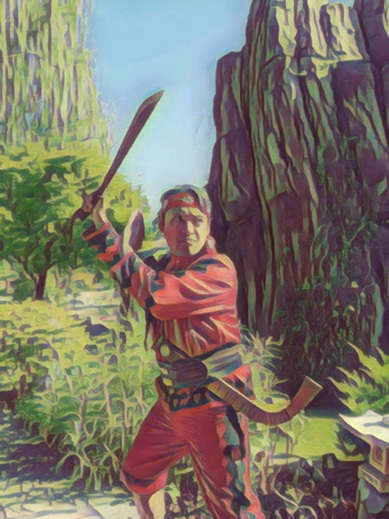
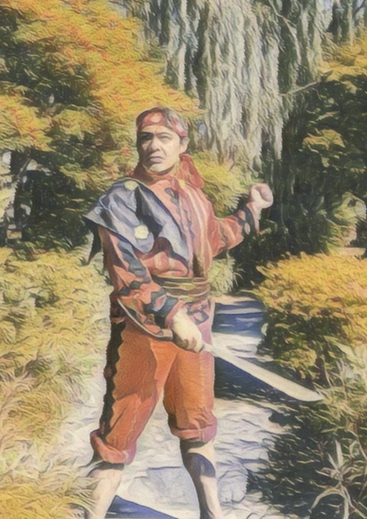
Subject: busalian 'mightiest' warrior
Culture: Sulod / Tumandok / Panay Bukidnon
Setting: tribal warfare, central Panay highlands 19th-early 20thc
Context (Event Photos, Primary Sources, Secondary Sources, Field Notes)
* Demetrio 1991 v2 p229 (citing Jocano 1969 p290)
"In Central Panay the custom of seeking revenge for wrongs done is practiced. The term they use is tukdo or revenge. This is a form of balos (kabaraslan) or reciprocation. Any person whose relatives or parents have been insulted, beaten up, or killed has the right to tukdo. He usually seeks revenge when someone hurts a loved one."
"Vengeance is encouraged in Panay-Bukidnon culture. The value of a person is expressed in a person’s ability to keep his honor in the community (Brandon and Richard 1999). According to many magurangs “if you have no honor, your value as a person is lower than the price of a tobacco leaf and to avenge the loss of a clan member is to keep the value of one’s honor intact and beyond question”. Vengeance has a very important role in the justice system in the Panay-Bukidnon culture. For most members of the tribe, the penalty of incarceration cannot compensate for the loss of a family member. The bereaved family considers vengeance as a shared community obligation rather than a personal pursuit. Failure to avenge can create an impression of the crime committed as just and predisposes a family to abuse by other members of the community. Retaliation that results to death of members of the other tribe or family provides a counterbalance for the loss. For the Panay Bukidnon, vengeance sustains morality and serves as a control mechanism to regulate human conduct and strengthen social order in the community.
"Whitman (2004) argues that people need to rationalize their actions of committing violent acts of vengeance by anchoring it on self-defense or extreme emotional disturbance. In the case of the Panay-Bukidnon, committing acts of vengeance is justified as a community obligation. The culture of vengeance is greatly influenced by the perception of bravery as a desirable virtue that brings many advantages to a person. In the Panay Bukidnon tradition, the reputation of being brave grants a man the privilege of selecting a wife from distinguished clans in the community. Brave men are highly regarded and are entitled to a lapi or share from the harvests and hunts of "other people.
"The magurang system is central in the conflict resolution process among the indigenous communities .... The magurang as an institution yields unchallenged “judicial authority” in resolving practically all forms of conflicts. Conflict resolution through tubiganay wherein combatants settle their disputes in a duel using bladed weapons and tying ropes around their waists to ensure that no one can escape is no longer practiced in the area of study. However, the researchers found out that private justice through vengeance by using other forms of killing is still practiced by the people of Central Panay Mountains which may lead to a large scale tribal war. The realization of private justice involves the practices of ugkhat, kantang, and durog. The rationale of tubiganay is self-preservation, defense of honor and domain of the family, clan, and tribe and maintaining social order. It serves as an effective détente to further violence. In the absence of an operating state’s judicial system in the area, “tubiganay” provides the mechanism of settling disputes before it escalates into a much higher level of conflict that may threaten the survival and well-being of the community at large. Local government officials’ knowledge of the existence of tubiganay is very limited since conflicts involving indigenous people are rarely brought to their attention. The common causes of tubiganay are cheating, exaggerated boast, vengeance, deep-seated retribution, non-payment of one’s obligation, banditry, and violation of domain which includes failure to seek hunting permission and deceitful declaration of hunting share. The persistence of tubiganay due to the following factors distance and rugged terrain, tubiganay is deeply culture bound because bravery is an ideal, informal combative training that includes kaingin, domog as competitive sport and sampalayo, perceived inappropriateness of the state justice system, and tubiganay as an institution. Social activities such as domog, sampalayo, and even kaingin preparation are considered combative training because they hone the skills and abilities of people to fight."
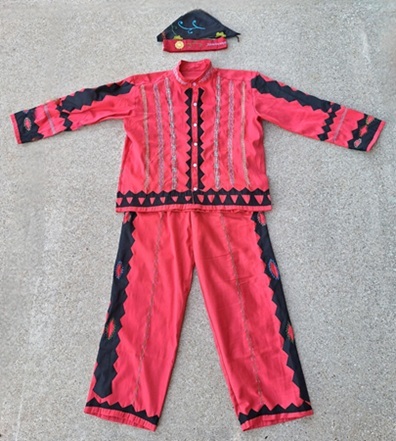
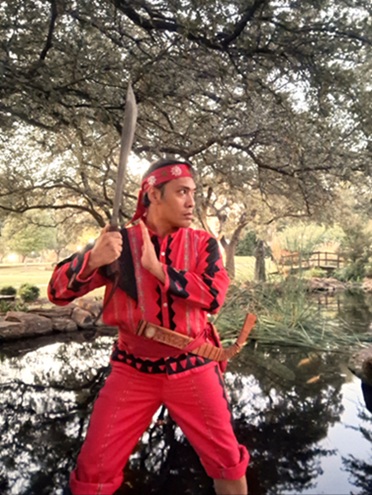
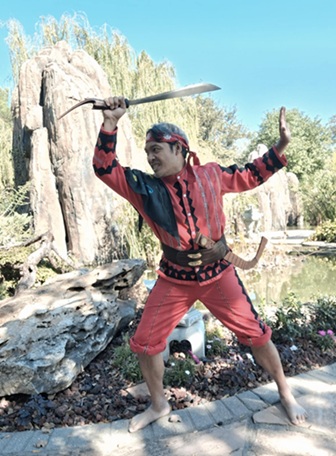
Costume
"Despite the geographical and cultural distance between the Ilocano and Sulod, the dressing scene in the Sulod epic bears a striking similarity to that in Lam-ang– Labaw Donggon addressed Abyang Alunsina, his dear revered mother: Open, please open… / that great wooden chest / with the elaborate cover. / Then from there select / discriminatingly / my treasured possessions / my elegant finery…
"The hero’s clothes and ornaments transform him into a man of prowess, ready for war and adventure: Thus dressed Labaw Donggon. / He was wrapped with silver / covered with gold. / He wore a headband / an embroidered kershief bright / not woven by local hands / but by those from other hands. / Then he picked up / his headdress saramingku / which sang with the wind / in such sweet refrain / for it was tasseled with silver / with fine laces adorned.
"This scene is repeated several times in the Sulod epic with the departure of each hero. The arming of the hero takes place in a subsequent scene where Labaw Donggon’s son asks for: My arrow which is poisoned / which, piercing one man / emerges from seven men. / And my spiral dagger / with very sharp edges…
"Labaw Donggon’s enemies, brandishing spears and krises– 'blades with seven curved edges' – are no match for his sons. They are overcome by the Sulod warriors’ charms, “overwhelmed by their magical skills.” For the Sulod warrior is a man of prowess, a busalian–a term still used by West Visayans to mean ” the mightiest of native priest,” who can command the elements, grant protection from weapons, fly through space, and bring water gushing from the heart of a human corpse."
* Jocano 1968 p57
"The ordinary attire of the Sulod is like that of the lowland Bisayans. When working in the kaʔingin the men wear short pants cut from rough cotton fabrics which they purchase from lowland traders. [....]
"On dress occasions, the young men wear trousers, as the lowland Bisayans do, and a shirt. Some elders however content themselves with the traditional G-String. They say it is more comfortable than the long trousers. Their headwear is an ordinary lowland buri hat during the dry season, and the saduk, a wide-rimmed hat made of tabanʔak leaves (Phragmates karka [Ritz] Trin.) and fine bamboo splints, during rainy days."
Spear
* Jocano 1968 p57
"The spear is the Sulod's most indispensable weapon. He usually carries it whether he is working in his kaʔingin or travelling around the mountainsides."
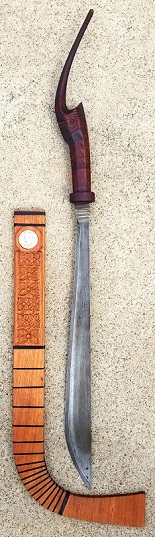
Sword
* Jocano 1968 p57-58
"Those who are well-off carry additional arms, such as the talibung and saput, long fighting bolos with elaborately carved handles. The bolos are classified according to the shape of the handles or the blades."
* Demetrio 1991 v2 p587 (quoting Jocano 1969 p52)
"Central Panay farmers use the bolo to clean the farm, to chop fuel, and as a weapon. No farmer is seen without a bolo hanging from his belt."
* Steel and magic 2020 p215
"The Bukidnon people live mostly in the mountain areas of interior Panay. Another name for this Bukidnon sword is moromonggo, after the mongo seed-like ball found at the tip of the long nose on the figure found on the handle. If silver covers the entire hilt, it is called a sapot. The Aklan Bukidnons are considered to produce the best artwork on the handles of the talibong.
"The handle figure, instead of the commonly found dragon serpent, might represent a deified ancestor. An alternative possibility is that the long-nosed figure is a birdman, or a Hindu Garuda, resembling the figures seen on several keris hilt variations; examples of these variations include the tajong one [SIC] found on the borders of North Malaysia and Thailand, the rajamala of West Java, and the burung of South Sumatra."
Body Art
* Jocano 1968 p32-33
"The mountain folk still practice toothfiling. Though I did not witness this activity during my stay in the mountains, I was informed that it is done during childhood after the permanent teeth appear. The child bites on a stick or piece of wood and the front teeth are made even by rubbing a whetstone against the enamel. They also chew betel, the ingredients being the leaves of the piper betel, the areca nut, lime and tobacco.
"Tattooing is another widespread practice. One can seldom find an upland man without a tattoo. There is however no formal design or figures favored; tattoos are imprinted according to one's desires. These are pricked into the skin with a needle or any pointed iron instrument dipped in an ink made from the juice of the ripe fruit of the vine langiʔngiʔ (Cayratia trifolia, Linn.) and powdered charcoal. Sometimes soot scraped from the bottom of pots or cooking cans is used instead of the usual ingredients. The tattoo is called batæk. The persistence of tattooing is of considerable interest to culture-historians as it was a widespread practice in the past among the Bisayans. In fact, the prevalence of 'skin-painting' led early Spanish chroniclers to describe the Bisayans as Pintados. Wrote Loarca: 'The men tattoo their entire bodies with very beautiful figures, using therefor small pieces of iron dipped in ink. This ink incorporates itself with the blood and the marks are indelible.'"