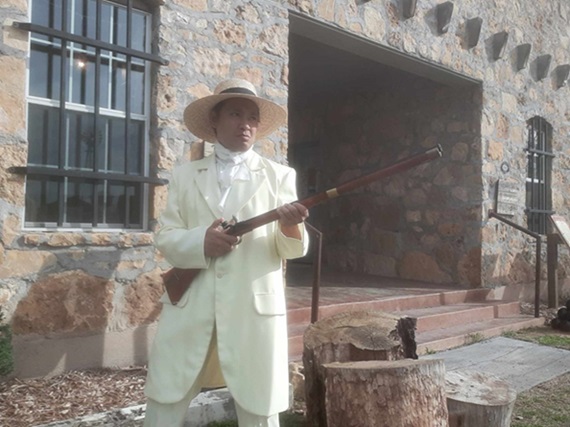
Subject: plantation master
Culture: Anglo-American southerner
Setting: Antebellum period, American South early-mid 19thc
Context (Event Photos, Primary Sources,Secondary Sources, Field Notes)
*
"
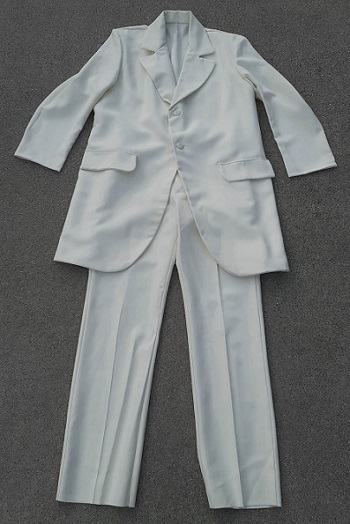
Costume
*
"
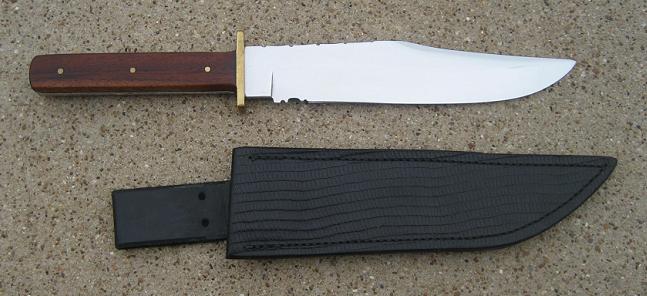
Knife
* Peterson/Feaser 1966 p32-33
"The famous American bowie knife was a direct descendant of the Viking scramasax, designed to do all the things its predecessor had done. James Bowie, for whom the knife was named, was one of the most colorful characters of the American frontier. Born probably in Kentucky, he lived and worked in Mississippi, Louisiana, Arkansas and Texas before he was killed at the Alamo in 1836. For at least the last ten years of his life, Bowie customarily carried a large all-purpose knife wherever he went. The first one was given to him by his brother Rezin in 1827. Then in 1830 Bowie had a larger and slightly different knife made, perhaps by an Arkansas blacksmith named James Black. Bowie's knives saved his life on several occasions, and the second one is said to have been burned on his funeral pyre at the Alamo. No one knows exactly what either knife looked like, but so great was Bowie's fame that both Americans and Europeans began to call all large fighting and general-purpose knives 'bowie knives.' These big knives enjoyed wide popularity on the American frontier and even in the more densely populated areas of the country. Gamblers, lawmen, buffalo hunters, forty-niners, Civil War soldiers of both sides and even congressmen carried them."