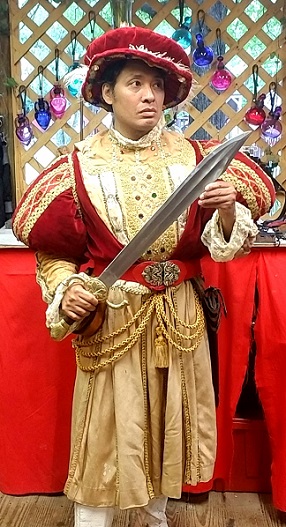
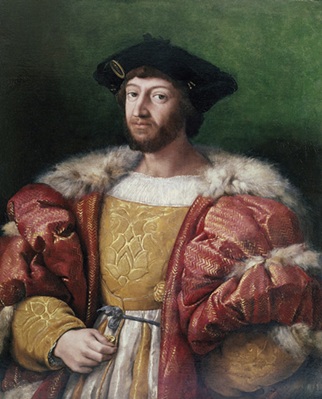
Subject: noble
Culture: Tuscan Italian
Setting: Italian Renaissance, Florence/Tuscany late 15th- early 16thc
Event Photos
* Metropolitan Museum of Art online > Florence and Central Italy, 1400–1600 A.D.
"During this period, Italy—and in the fifteenth century, Florence above all—is the seat of an artistic, humanistic, technological, and scientific flowering known as the Renaissance. Founded primarily on the rediscovery of classical texts and artifacts, Renaissance culture looks to heroic ideals from antiquity and promotes the study of the liberal arts, centering largely upon the individual’s intellectual potential. As a result, tremendous innovations are made in the fields of mathematics, medicine, engineering, architecture, and the visual arts, while a surge of vernacular literature attempts not only to emulate, but also to surpass antique models. Some of the most celebrated figures of Renaissance Italy, supremely exemplified by the artist, scientist, and inventor Leonardo da Vinci (1452–1519), excel in several fields.
"At this time, Florence is a hub of humanist scholarship and artistic production, due largely to the funding of the powerful Medici family, who, by the end of the period, exert their political and financial influence over much of central Italy. Significant urban development also occurs in Siena, an important artistic center, and the influential Montefeltro rulers of Urbino establish an illustrious court at which the liberal and visual arts flourish."
Primary Sources
"With its seat of power in Florence, the [Medici] family, which functioned much in the same way as an ancient Roman dynastic line, knew that art was one of the most potent tools in its arsenal. And the Medicis employed it time and again to exert their dominance in Renaissance Europe. While they became the most successful bankers in Tuscany, they also became its most prominent artistic patrons, sponsoring artists like Michelangelo and Raphael (not to mention thinkers like Galileo). And while they ascended the political and religious ranks of Florence (several Medicis became popes) and Europe in general, the Medicis had their images rendered in novel and meaningful ways by the greatest portraitists of the day."
Secondary Sources
*
"
Field Notes
1.