Subject: knight, man-at-arms
Culture: English
Setting: Wars of the Roses, England mid-late 15thc
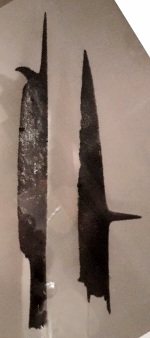
Object: 1471 English knight polearms = bill, halberd, pollaxe
Royal Armouries Museum > War Gallery *
"Pollaxe North European, probably English, 1450-1500 The pollaxe is a two-handed infantry staff weapon.
Its head includes an axe-blade, hammer-head, and a top-spike, designed to hack, crush and pierce plate armour as well as flesh and bone.
The name derives from the old English poll, meaning head and has nothing to do with its wooden haft." ...
Higgins Armory Museum > Castle Quest *
"POLLAXE Powerful two-handed weapon for armored combat."
* Royal Armouries Museum > War Gallery
"Bills English, 15th century The characteristic weapon of the English heavy infantry of the 15th century was the bill,
used in the same way as the halberd on the continent. Originally an agricultural implement,
military versions were being made by the late 13th century." ...
Higgins Armory Museum > Great Hall *
"Pollaxe, late 15th century North European Steel; brass; wood Weight: 5 lbs., 5 oz." ...
* Royal Armouries Museum > Tudor Power and Glory: The Field of Cloth of Gold
"Pollaxe So-called from the word 'poll' for a head, hence 'head-axe'. Pollaxes were used in battle by dismounted men-at-arms in the late 14th and early 15th centuries. The pollaxe later became a popular weapon for the aristocracy and was used in tournamnet foot combats throughout the 16th century. Possibly English, about 1500." ...
"Pollaxe The axe-blade, spikes and hammer allowed the competitor to beat at his opponent's armour or try to prise apart its plates. The fine pierced decoration suggests that this pollaxe was also carried in parades. It was once said to have belonged to King Edward IV but sadly there is no evidence to confirm this royal attribution. European, about 1485." ...
"Pollaxe The pollaxe was Maximilian I's favoured weapon and popular throughout the courts of Europe, including England and France. The all-enclosing armour of Henry VIII was designed to protect against this dangerous weapon.
"This was originally a military horseman's hammer and bears the old Scottish royal motto 'In my defens God me defend'. It also has the initials of a former owner, Edward Cornwall, 10th Baron Burford. Scottish, early 16th century." ...